Whether you need to scan documents, process images, or transcribe videos, we deliver tailored solutions that remove obstacles and help you succeed without extra stress. Get rid of manual data entry and embrace automated text extraction in days, not months.
Solve today’s challenges
We cut labour costs by automating data capture, so no more hours wasted on typing out information.
We reduce mistakes by pulling text straight from documents, so your data is cleaner and more reliable.
We speed things up by turning scanned files into searchable, editable text in seconds.
We make searching easy by converting paper records into indexed digital files that you can find quickly.
We help you stay compliant with accurate and accessible digital records—ready when you need them.
We digitise your documents so you can finally move to faster, more efficient digital processes.
Customized solutions for small and medium businesses, as well as large enterprises
Skip the manual data entry – extract text from forms, invoices, and other structured documents with ease. Streamline data capture processes, reduce errors, and integrate with existing systems and workflows for stress-free data processing.
Scan and convert paper documents into digital formats. Extract text from scanned files, PDFs, and images for easy data archiving and retrieval and take advantage of full-text search capabilities across digitised document repositories.
Extract text from images, videos, and multimedia content, transcribe video footage, enabling closed captioning and subtitling. Unlock text embedded in visual assets and succeed without extra stress.
Classify and categorise documents based on extracted text, automate data extraction from complex forms and templates, validate and enrich extracted data with external data sources without unnecessary complexity.
Extract critical information from contracts, agreements, and legal documents, ensure compliance with data privacy regulations, and automate the process of regulatory reporting.
We don’t stretch projects into “phases.” We ship usable AI solutions for business fast, test in real data, and scale what works.
We build AI inside your infrastructure, not on top of it. Your systems. Your data. Your rules.
We use AI daily. We know what works because we’ve already broken it, fixed it, and scaled it ourselves.
Clients see 4× faster delivery and up to 30% cost reduction once AI-powered business solutions go live. Efficiency stops being a KPI, it becomes your default setting.
What we do: Interview stakeholders, review data flows, check system access, and score use cases by impact vs. effort. What you get: A short decision brief: target workflow, success metric, data needs, and risk flags.
What we do: Build a working pilot against real data: a copilot, agent, or model plugged into a safe slice of your stack. What you get: A demo you can click, latency/accuracy numbers, and a rollout plan.
What we do: Wire the pilot into production: APIs, auth, permissions, logs, and monitoring. What you get: A deployed feature or workflow that people actually use – with audit trails and alerts.
What we do: Expand to new teams/use cases, tune prompts/models, and train your people. What you get: Dashboards, SOPs, and a clean handover – or we keep running it with you.
OCR, or Optical Character Recognition, is a technology widely used across various industries to convert printed or handwritten text into machine-readable digital data. For example, in banking it processes checks and automates data entry. Healthcare uses OCR to digitise patient records and extract information from medical forms. Educational institutions use it to convert printed books into digital formats. In logistics, OCR helps read barcodes and track shipments. Get in touch to get a free expert consultation.
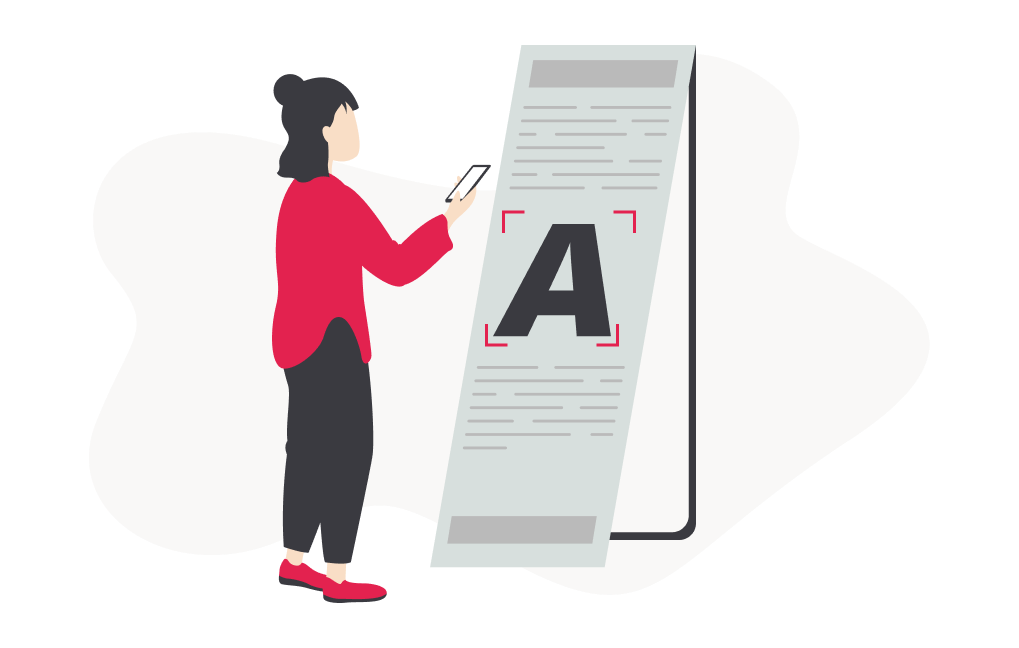
In real life, OCR is used to convert different types of documents, such as scanned paper documents, PDF files, or images taken by a digital camera, into editable and searchable data. For example, OCR technology can turn a photographed receipt into a text file that can be edited or stored in a database. It’s also used in automated data entry systems to extract information from invoices and receipts. Moreover, OCR is widely used in mobile apps to scan business cards and automatically add contact details to an address book.
As a rule, OCR struggles to recognise text in images of poor quality or those with complex backgrounds. Additionally, OCR accuracy varies based on the language being processed since less common languages may have limited support. Contact us to learn more about optical character recognition and how it can benefit your business.