
A root principle of Agile methodology is to build high-performing teams composed of motivated experts. However, different people get motivated by different things. Some are driven by the need for a paycheck, while others are passionate about their work. Regardless of the scale, most individuals have ambitions, goals, and desires they strive to fulfil.
Did you know?
- Highly motivated teams boost business profitability by 21%.
- Engaged employees show a 20% improvement in performance.
- Engaged employees are 87% less likely to leave their companies.
Rule 1: Promote a culture of emotional safety
Many managers tend to overlook the importance of psychological and emotional safety in the workplace. This concept revolves around the belief that sharing opinions, ideas, comments, or seeking help won't lead to embarrassment, humiliation, or punishment.
https://www.youtube.com/watch?v=eXDNkwIeOqAA development team depends heavily on collaboration, and a high level of psychological safety ensures that their contributions, regardless of how minor, are acknowledged. This recognition fosters confidence and trust among team members, which can enhance their overall performance.
On the other hand, leadership plays a key role in fostering this type of environment. Team leaders need to cultivate the right attitudes and behaviours in their employees. By setting the appropriate tone, they can greatly influence their teams.
Helpful and collaborative leaders also help create a positive environment that encourages psychological safety. Such leaders can then push their teams to surpass expectations and reach their goals.
Additionally, as a leader, you should demonstrate the following:
- Show genuine interest in your team members, be approachable, and maintain a friendly demeanour.
- Involve your team in the decision-making process by seeking their input.
- Provide clear instructions and guidance on tasks.
- Nurture an environment that motivates your team to overcome their own challenges.
According to a McKinsey survey, leadership practices significantly influence team psychological safety. An organisation that fosters positive leadership relationships enhances a positive team environment, leading to increased innovation and creativity. Implement leadership development programs to cultivate positive leadership behaviours throughout your organisation to ensure psychological safety prevails. Equipped with these skills, team leaders will be better positioned to promote trust, safety, and collaboration within their teams.
Rule 2: Establish clear goals and plans for software developers
Regardless of the size of your software development team, having a clear plan is a must for achieving goals. Various methodologies can assist in charting a course for your team. For example, Agile implies iterative cycles to develop a product, while Kanban focuses on visualising project progress and identifying bottlenecks.
Other SDLC models are valuable for defining roles and maintaining a clear project overview. In complex software projects, a well-defined plan enables team members to focus sequentially on tasks rather than tackling everything simultaneously.
Rule 3: Appreciate ideas
Developers who are motivated often have valuable insights—don't overlook them! While having a clear project vision is important, it shouldn't preclude you from being open to new ideas.
Collaboration can lead to innovative solutions, and your development team may offer ideas that enhance project efficiency. Moreover, acknowledging and implementing these ideas can increase their sense of value and further boost their motivation.
Rule 4: Offer competitive compensation with benefits
While it may seem pragmatic, the truth is that people work to earn a living and support themselves financially. Therefore, if you aim to motivate your development team, start with competitive compensation.
In a nutshell, employees should receive a salary well-proportioned with their skills and aligned with industry norms. Otherwise, they may be inclined to leave for opportunities offering better pay. Indeed, conducted a study outlining that higher salaries were the primary factor driving employees to seek employment elsewhere.
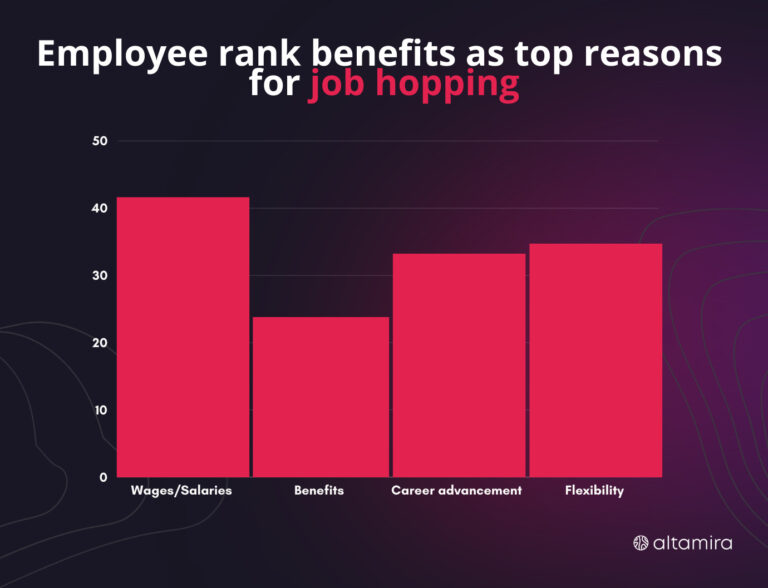 So, stay informed about the average salaries in your industry and region. You can do this by consulting your country's labour department or using resources like Glassdoor and Payscale. Regular review sessions with employees should follow to assess whether their compensation aligns with their skills, performance, and industry benchmarks.
However, compensation is only one aspect. Benefits are equally vital in motivating your development team.
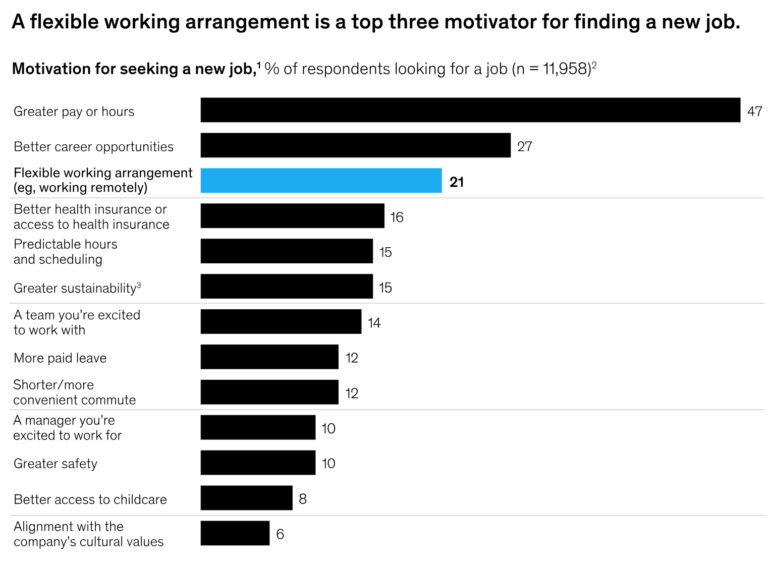
It's important to recognise that individuals have varying priorities. Some prioritise spending more time with family, while others, especially younger staff, may appreciate larger bonuses. These preferences can evolve over time. For example, the COVID-19 pandemic accelerated the adoption of remote work, allowing people to experience its benefits firsthand. Consequently, flexible work arrangements have become a crucial factor in job considerations, as highlighted in a McKinsey & Company study.
So, stay informed about the average salaries in your industry and region. You can do this by consulting your country's labour department or using resources like Glassdoor and Payscale. Regular review sessions with employees should follow to assess whether their compensation aligns with their skills, performance, and industry benchmarks.
However, compensation is only one aspect. Benefits are equally vital in motivating your development team.
It's important to recognise that individuals have varying priorities. Some prioritise spending more time with family, while others, especially younger staff, may appreciate larger bonuses. These preferences can evolve over time. For example, the COVID-19 pandemic accelerated the adoption of remote work, allowing people to experience its benefits firsthand. Consequently, flexible work arrangements have become a crucial factor in job considerations, as highlighted in a McKinsey & Company study.
When uncertain, it's wise to discuss your development team's specific needs to understand their perspective. Additionally, offering customised benefits packages ensures that each staff member receives the perks that are most valuable to them.
Rule 5: Provide a stable work-life balance
Achieving a sustainable work-life balance is essential for achieving long-term success. This approach promotes happier and healthier employees, significantly enhancing their effectiveness at work. Moreover, it helps to mitigate employee burnout and reduce turnover, which can incur substantial costs over time. On average, replacing an employee can take up to 42 days and cost as much as $4,425, highlighting the importance of maintaining a balanced work-life environment. Thus, cultivating work-life balance is beneficial for both employees and employers. The question remains: how can this balance be nurtured? You can start by looking at the biggest roadblocks to work-life balance.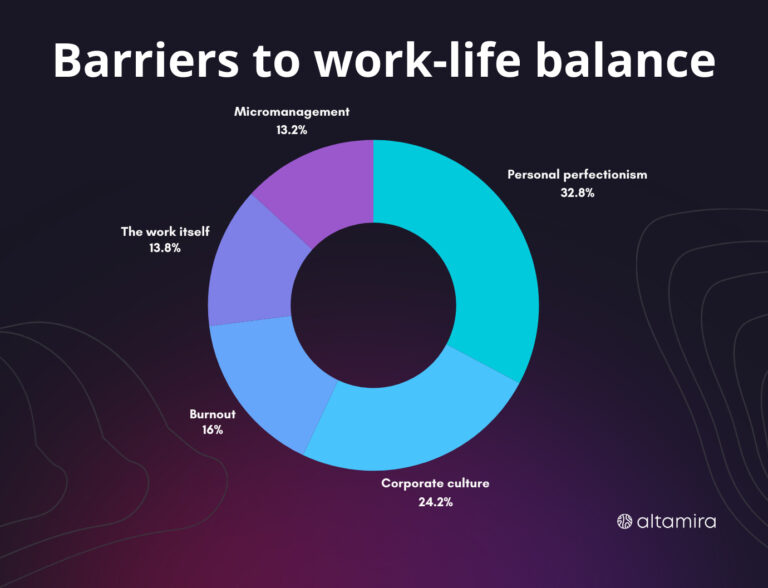 The good news is that you can address these challenges. One effective strategy is to foster a flexible work environment. Providing options for variable schedules and remote work opportunities can help alleviate burnout and workplace stress.
It's also important to minimise overtime, which is unfortunately common among developers. Despite being perceived as a sign of productivity, overtime can be detrimental to health and efficiency in the long term. Research indicates that working around 35 hours per week, approximately 7 hours a day, is optimal for productivity.
The good news is that you can address these challenges. One effective strategy is to foster a flexible work environment. Providing options for variable schedules and remote work opportunities can help alleviate burnout and workplace stress.
It's also important to minimise overtime, which is unfortunately common among developers. Despite being perceived as a sign of productivity, overtime can be detrimental to health and efficiency in the long term. Research indicates that working around 35 hours per week, approximately 7 hours a day, is optimal for productivity.
Rule 6: Involve software engineering experts in decision-making
Consider engaging your entire development team in decision-making processes. Ensure everyone attends meetings where project designs and architecture are discussed. This inclusivity makes team members feel valued and encourages them to contribute valuable insights and ideas.
Rather than just relying on senior software engineers to voice their thoughts, actively invite all team members to participate in discussions. This approach allows you to benefit from diverse perspectives within the team.
Remember that introverted team members may be less likely to speak up unprompted. Therefore, make a point to ask for their opinions and ideas.
Above all, show genuine appreciation for your developers' suggestions. Being open to new ideas fosters an environment where team members feel empowered to share their perspectives. This strengthens working relationships and ensures projects stay on course toward success.
The final words
Effective communication is the initial key to team motivation. Understanding your team's viewpoints enables you to assess their satisfaction and pinpoint areas for enhancement. However, achieving this can be challenging, especially in large teams.
If you're seeking to onboard a team of highly skilled remote developers, consider our highly motivated and high-performing dedicated teams. We offer:
- Selected expertise with the exact skill sets, experience, and domain expertise you need
- Resource optimisation, as you don’t have to waste time looking for developers, as we can provide you with all the required resources.
- Project-oriented approach with no distraction for any other activities
- Cost-efficiency so you can save money on office-related expenses like rent, equipment, workplaces, etc. Due to the dedicated software development team model, you only pay for the working hours.
- Scalable team, expand or narrow down the team without compromising deadlines or your budget and still get high-quality development services.
Our dedicated teams are well-coordinated, which reduces the time needed for goal setting and execution, leading to more impactful results. Contact us to get free expert consultancy