
A smooth pilot is reassuring but usually misleading. The job of a pilot is to strip out everything that makes software hard to run. That means messy data, live traffic, brittle integrations, and the person who owns it late at night. Take those away and almost any capable AI model looks ready. A clean pilot proves that the model can do the task on a good day. It reveals almost nothing about moving from an AI pilot to production.
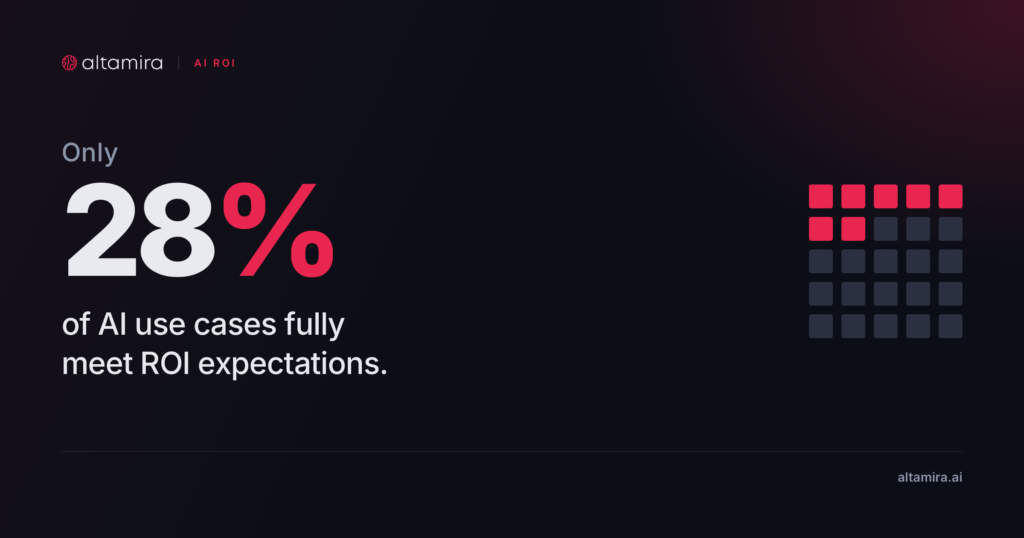
Six weeks in, the good days end. Real data arrives dirtier than the sample, the pilot team rotates onto the next thing, and the first real load exposes costs nobody modeled. This is the common gap between a working pilot and a running service, and it swallows most enterprise AI budgets. MIT's NANDA initiative measured it in 2025: across 300 enterprise production deployments, 95% of generative AI pilots delivered no measurable return.
There is nothing mysterious about why AI pilots fail. Teams that scale AI regularly see the same handful of problems in every AI pilot project, and roughly in the same order. That predictability is the good news, because a failure you can see coming is one you can design out before it costs you.
The pilot was never the hard part
A pilot is built to succeed. You pick a narrow use case, hand it clean data, assign a motivated team, and skip the parts that make software hard to run. There is no service level agreement, no on-call rotation, and no auditor asking questions. Under those conditions, almost any capable model will perform.
Production removes every one of those cushions. The same build now faces messy inputs, real traffic, security reviews, and a finance team watching the bill. Scaling AI pilots means rebuilding for the conditions they were designed to avoid.
A pilot proves feasibility, not operability
Feasibility asks whether the model can do the task on a good day. Operability asks whether it can do the task every day, at volume, with real enterprise data, and with someone accountable when it fails. These are different questions, and a pilot only answers the first one.
The gap shows up in the data. A Gartner survey found that on average only 48% of AI projects reach production. The same survey put the trip from prototype to production at about eight months. A demo that works in a week can still take most of a year to become a service you can trust.
| Dimension | In the pilot | In production |
|---|---|---|
| Data | Curated, clean sample | Full live feed, messy and incomplete |
| Scope | One narrow task | Edge cases, exceptions, and drift |
| Users | A handful of insiders | Everyone, all at once |
| Failure handling | Someone notices and reruns it | Needs a defined fallback and alert |
| Ownership | A dedicated tiger team | Whoever is left to maintain it |
| Success metric | "It works in the demo" | A business value, tracked over time |
| Cost model | A rounding error | Per-request cost at full volume |
The four questions a pilot usually leaves unanswered
A clean pilot result hides the questions that decide whether you can scale. Most teams reach the go decision without answering any of them.
- What happens when the input data is incomplete, out of date, or malformed?
- What does one request cost at full production volume, and does that math still work?
- Who fixes the production system when it starts returning garbage?
- How will you know about the model accuracy in three months?
These four gaps explain a large share of why launching pilots fail. In almost every case, the operating conditions were the weak point, while the model did its job.
What breaks in week seven
The failures are predictable, and they tend to arrive together once real usage starts. Four patterns account for most of them.
Data that was clean in the sample and dirty at scale
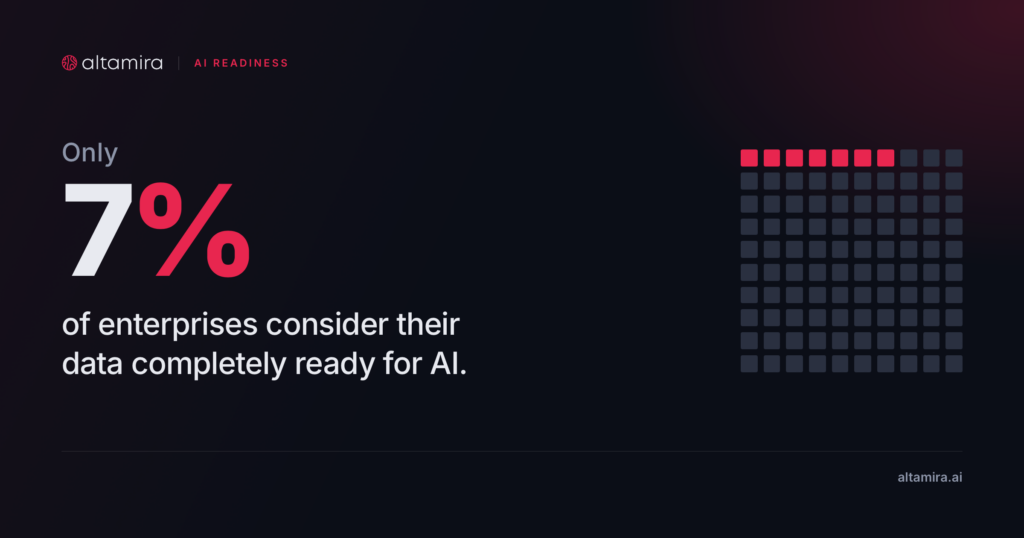
Pilots run on a groomed sample. Production runs on the full firehose: duplicate records, missing fields, stale entries, and formats nobody documented. Gartner names poor data quality as a leading reason why at least 30% of generative AI projects are abandoned after the proof-of-concept stage.
The cost is not only bad output. Teams start paying what one analysis calls a verification tax, spending hours checking and correcting results until the promised time savings vanish. A model is only as reliable as the data feeding it, and pilot data is almost never representative.
Integrations nobody scoped
The model works in isolation. Then it has to read from the CRM, write back to the ERP, respect access controls, and handle rate limits. It also has to behave when a downstream system is slow or down. None of that was in the pilot because it ran against a static export.
BCG reported in late 2024 that 74% of companies struggle to achieve and scale value from AI. Integration debt is a big part of the reason. The hard engineering sits between the model and the systems it has to touch.
Cost and latency curves that only appear under load
A few cents per call feels free in a demo. At a hundred thousand calls a day, that same rate becomes a line item someone has to defend. Latency behaves the same way: fine for one user, painful when a thousand hit it at once, and requests start queuing.
Gartner lists escalating costs as one of the top drivers of abandoned AI projects. These curves are invisible in a pilot precisely because a pilot never runs at production scale.
No owner after the pilot team disperses
The pilot succeeded because a focused team gave it their full attention. Once the demo lands, that team moves to the next thing, and the build is left without a clear owner. Nobody is watching it, nobody is improving it, and quality erodes.
MIT's researchers point to this as a core failure: AI initiatives stall because most AI tools cannot retain feedback, adapt to context, or improve over time. Without an owner, a system that was accurate at launch drifts, and no one notices until a user complains.
Define production criteria before the pilot, not after
The path from AI proof of concept to production starts before the pilot does. Decide what "working" means in business terms first, then build the pilot to test against that bar. Teams that skip this step negotiate success criteria after the fact. That is how a technically fine result still gets killed for unclear value.
Accuracy thresholds tied to a business decision
An accuracy figure means nothing on its own. 92% is excellent for one task and dangerous for another. Set the threshold against the decision the output feeds and the cost of getting it wrong. A model that routes support tickets can tolerate errors a model that approves credit cannot.
Acceptable failure rate and what happens on failure
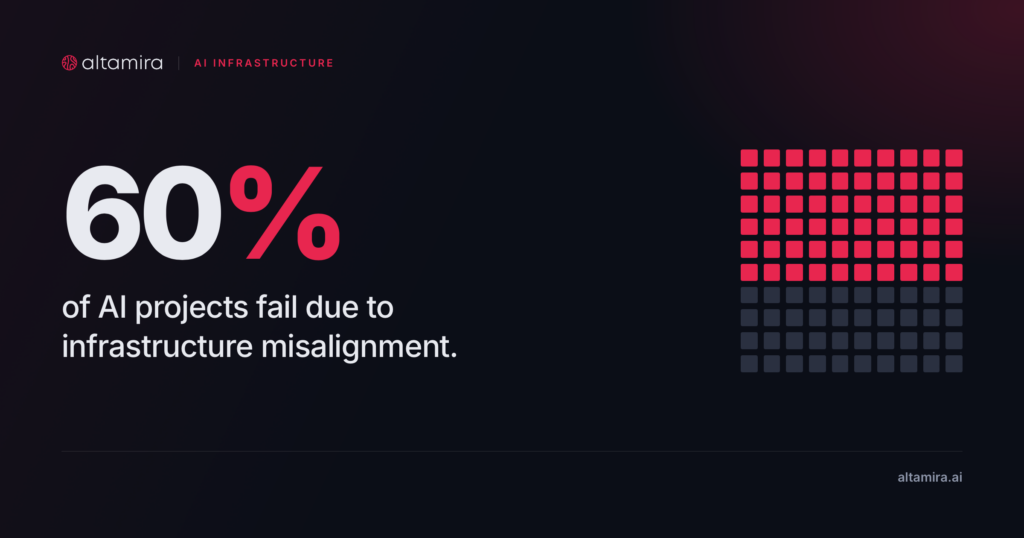
No system runs at 100%, so decide the fallback before launch. When the model is unsure, does it hand off to a person, retry, or return a safe default? This matters most in multi-step work, where small error rates compound fast. At 95% accuracy per step, a 20-step chain succeeds only about a third of the time.
Who signs off and against which metric
Name one owner, one metric, and one go/no-go date at the start of the pilot. When those three things are agreed in writing, the scale decision becomes a measurement rather than an argument. When they are not, the loudest opinion in the room wins, and that is rarely the right call.
The handover nobody plans
Moving from AI proof of concept to production is a handover, and it is the step most teams forget to schedule. The pilot produced a working AI initiative. Turning that AI initiative into a supported service is separate work with its own cost and timeline.
From experiment repo to supported service
Pilot code is written to be thrown away, and it usually shows. To achieve measurable business outcomes, production needs real engineering around the model: automated tests, enterprise deployment pipeline, error handling, secrets management, and logging you can read. Reusing pilot code as-is is one of the surest ways to inherit outages.
Projects with clear pre-approval metrics achieve a 54% success rate.
Documentation, evaluation sets, and runbooks
The single most valuable artefact from a pilot is the evaluation set: the examples that define right and wrong for your use case. Keep it, grow it, and run it on every change. Pair it with runbooks that tell an on-call engineer what to do when the system misbehaves. The fix should never depend on the one person who built it.
In-house team, vendor, or blended ownership
Ownership is a strategic choice, and the data favors partnership. MIT found that pilots built with specialized vendors succeeded roughly twice as often as internal-only builds. A blended model splits the work: an external team stands the system up, and an internal team learns to run it. That captures outside speed and inside durability.
"They pick one pain point, execute well, and partner smartly." Aditya Challapally, lead author, MIT's The GenAI Divide report
AI governance as a build requirement
Treat governance as architecture rather than paperwork bolted on at the end. Retrofitting it after launch is expensive. Regulation is also catching up: the EU AI Act sets tiered obligations for AI systems, with enforcement expected to phase in through 2026. Building for it later usually means building it twice.
Audit trails and access control
Every agent and model call should run under a verifiable identity with scoped permissions. You need a record of what the system saw, what it decided, and what it changed. Without that trail, you cannot debug an incident or answer an auditor, and both will happen.
Monitoring for drift and quality regression
Models degrade quietly as the world moves away from their training data. Production needs monitoring that tracks output quality over time, not just uptime. Run your evaluation set on a schedule, watch for drift, and alert when accuracy slips below the threshold you set at the start.
Compliance requirements that change the architecture
Data residency rules, PII handling, and the right to an explanation can force real design changes. A requirement to keep data in one region, or to explain any automated decision, can rule out an architecture you already built. Knowing these constraints before you design is far cheaper than discovering them during a security review.
A realistic pilot-to-production timeline
Scaling AI pilots takes longer than most plans assume. MIT found that large enterprises average around nine months to scale, against roughly 90 days for mid-market firms. The table below shows a grounded path from an idea to a running service, with a decision gate at each stage.
Scaling AI pilots takes longer than most plans assume. MIT found that large enterprises average around nine months to scale, against roughly 90 days for mid-market firms. The table below shows a grounded path from an idea to a running service, with a decision gate at each stage.
| Phase | Rough duration | What happens | Exit gate |
|---|---|---|---|
| Discovery | 1 to 2 weeks | Define the business outcomes, data reality, and success bar | Agreed criteria and named owner |
| Pilot | 4 to 6 weeks | Build against production-shaped data, not a clean sample | Meets the threshold set in discovery |
| Production readiness | 4 to 8 weeks | Integrations, security, cost modeling, evaluation set | Passes load and security review |
| Hardening | 2 to 4 weeks | Monitoring, runbooks, fallback paths, drift alerts | On-call ready, rollback tested |
| Launch | 1 to 2 weeks | Phased rollout behind guardrails | Live for a real user segment |
| Steady state | Ongoing | Monitor, retrain, and improve on real feedback | Quality tracked against the metric |
The point of the gates is not bureaucracy. Each one is a cheap place to stop before the expensive one, which is a failed launch in front of real users.
How Altamira structures AI engagements to avoid pilot limbo
Altamira builds AI pilots against the conditions they will meet in production. The pattern is consistent across engagements. Our team defines the business metric and data reality in discovery, then builds the pilot on production-shaped data. The handover is planned before the pilot starts, not after it succeeds.
Governance and integration are build requirements from day one. Audit trails, access control, and monitoring go into the architecture, not a later retrofit. Ownership follows the same blended model: Altamira stands the system up while your team learns to run it. That lines up with the partnership advantage MIT's data points to.
Want a second opinion on whether an enterprise AI pilot project is ready to scale? Altamira can review your success criteria, data, and handover plan against the gates above.
A go/no-go checklist before you scale
Run through this before you commit budget to production. A no on any item is a reason to pause, not a reason to push harder.
- The success metric is a business number, agreed in writing, with a named owner.
- The pilot ran on data that looks like production data, not a clean sample.
- Per-request cost at full volume has been modeled and still makes sense.
- Every integration the system needs has been scoped and tested, not assumed.
- A fallback exists for when the model is unsure or wrong.
- An evaluation set exists and runs on every change.
- Audit trails and access controls are in place.
- Monitoring watches output quality and drift, not only uptime.
- Compliance and data-residency requirements are confirmed, not guessed.
- Someone is accountable for the system after launch, with time budgeted to run it.
Conclusion
The 95% failure rate says less about the technology than about execution. It reflects how teams move from AI proof of concept to production, and that is a process you can control. The work is unglamorous: define the metric, build on real data, plan the handover, and treat governance as part of the build. Teams that do it early are the ones capturing value while everyone else is stuck in pilot limbo.
"Executives are impatient to see returns on GenAI investments." Rita Sallam, Distinguished VP Analyst, Gartner
If your pilot worked but the path to production is unclear, that is the normal place to be, and it is a fixable one. Book a working session with Altamira to pressure-test your scale plan before you spend the production budget.
Frequently asked questions
Why do most AI pilots never reach production?
Most AI pilots never reach production because they are built to prove feasibility, not to run as a service. Pilots use clean data, a narrow scope, and a dedicated team. That setup hides the data quality, integration, cost, and ownership problems that appear under real load. MIT found 95% of enterprise generative AI pilots deliver no measurable P&L business impact, largely due to weak integration rather than weak models.
What is the difference between an AI pilot and a production AI system?
An AI pilot tests whether a model can do a task under favorable conditions. A production AI system does that task reliably at scale, every day, with accountability. The pilot uses a curated sample and a temporary team. Production faces messy live data, real traffic, security reviews, cost pressure, and the need for monitoring and a clear owner. Moving from an AI pilot to production means rebuilding for those conditions.
What should be agreed before an AI pilot starts?
Before an AI pilot starts, agree on the business metric it must move, the accuracy threshold tied to a decision, and the acceptable failure rate. Name one owner and one go/no-go date in writing. Confirm what data the pilot will use and whether it resembles production data. Settling these upfront turns the scale decision into a measurement rather than a risk to your existing enterprise systems.
How long should an AI pilot run before a go/no-go decision?
An AI pilot should usually run four to six weeks before a go/no-go decision. That is long enough to test against realistic data, but short enough to avoid open-ended spend. The decision date should be set at the start, not negotiated later. Keep in mind that reaching production takes far longer than the pilot itself. A Gartner survey found it takes about eight months on average to move from prototype to production.
What breaks first when an AI pilot is scaled up?
Data quality usually breaks first when scaling AI pilots. The clean sample used in the pilot gives way to the full live feed. That feed brings missing fields, duplicates, and stale records the model was never tested on. Integration gaps, per-request cost at volume, and latency under load follow close behind. Gartner cites poor data quality and escalating costs as leading reasons projects get abandoned after the proof of concept.
Who should own an AI system after the pilot ends?
One named person or team should own the AI system after the pilot ends, with time budgeted to monitor, fix, and improve it. Ownership can sit in-house, with a vendor, or in a blended model where an external team builds and an internal team runs it. MIT found vendor partnerships succeed about twice as often as internal-only builds, so a blended approach often works best when you scale.
How do you measure ROI on an AI pilot?
Most organizations measure ROI on an AI pilot by tracking a business metric it was meant to move: hours saved, cost avoided, or revenue influenced. Compare that against the fully loaded cost to build and run it. Set that metric before the pilot starts so the comparison is honest. Avoid vanity measures like demo quality. If the AI pilot project cannot be tied to a P&L number, it is not ready to scale.
What does a realistic pilot-to-production timeline look like?
A realistic artificial intelligence pilot to production timeline runs through discovery, a four to six week pilot, production readiness, hardening, launch, and steady-state operation. Each stage has its own decision gate. MIT found large enterprises average around nine months to scale, versus roughly 90 days for mid-market firms. The pilot is the short part. Integration, security, cost modeling, and monitoring take most of the time.